


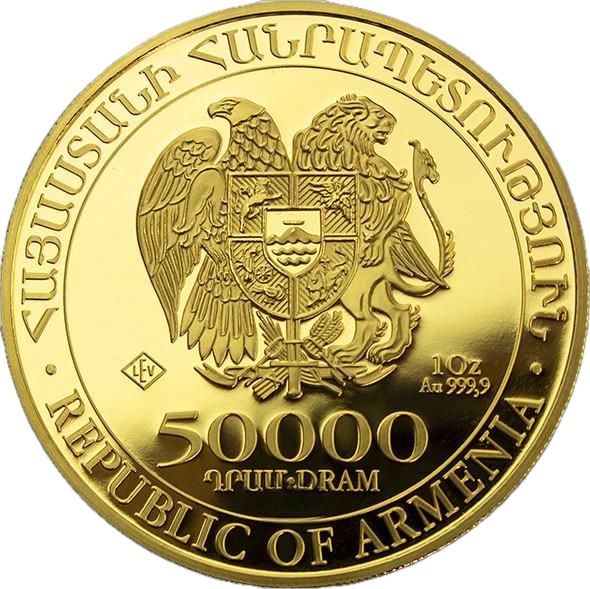

Noah's Ark 1oz Gold Coin | different years
Products in brilliant uncirculated condition may exhibit milk spots, small inclusions, or fine scratches; circulated items from older years may also show slight tarnishing. These characteristics do not constitute defects. Specific years cannot be selected.
Leipziger Edelmetallverarbeitung
Leipziger Edelmetallverarbeitung GmbH (LEV), based in Rötha near Leipzig, is a modern manufacturing center for precious metal products and is part of the Geiger Group. Since 1976, it has continued the long-standing tradition of Saxon precious metal processing, which dates back to the Middle Ages in Leipzig.
GPSR: Leipziger Edelmetallverarbeitung GmbH
Stromstraße 6
04571 Rötha
Germany
+49 (0)34206 77664-100
Fax: +49 (0)34206 77664-181
info (at) leipziger-edelmetallverarbeitung.de
Various Years – Natural Characteristics of Minting, Material, and Time
The offered products originate from different years and therefore represent various minting periods and production phases. Each issue carries the characteristics of its respective year and reflects the technical and material-related features of the time in which it was produced. This diversity gives such pieces their distinctive character and makes them authentic examples of continuous precious metal minting over several years.
Products in brilliant uncirculated (BU) quality are characterized by a fresh, clear strike and an originally even surface. Nevertheless, silver and gold coins in this condition may still show milk spots, fine inclusions, or small scratches. These features do not result from improper handling, but rather arise from material and production-related processes. They may appear immediately after minting or develop over time. Particularly with silver, milk spots are a well-known phenomenon that can occur independently of storage or handling and have no influence on the metal content or authenticity of the piece.
For circulated products from older years, additional visible surface changes may occur. These include slight tarnishing, changes in coloration, or a subtle patina that has developed over time. Such changes result from natural reactions of the metal with the surrounding air and are a typical characteristic of older mintings. They often give the piece an individual appearance and emphasize its historical origin. These traces are expressions of age and history and do not represent a loss of quality.
It is important to note that all of these characteristics—whether milk spots, small inclusions, fine scratches, or tarnishing—are not defects. They do not affect the precious metal content or the fundamental minting quality. Rather, they are natural properties of precious metals and part of the manufacturing process. Especially with products from different years, a perfectly uniform appearance is neither intended nor realistic.
The selection from various years also means that the minting year, fine design details, and surface appearance may vary. These differences make each individual piece unique. They demonstrate that precious metal products are not industrially standardized mass items, but creations whose appearance is shaped by material, time, and manufacturing conditions.
Taken together, these products represent authenticity and material integrity. They show precious metal as it truly is: dynamic, evolving, and not entirely controllable. It is precisely these qualities that create the appeal of mintings from different years. They combine substance with history and preserve their value regardless of small visual variations.
| Metal | Gold |
| Form | Gold Coin |
| Country of Origin | Armenia |
| Manufacturer | Leipziger Edelmetallverarbeitung |
| Series | Noah's Ark |
| Purity | 999.9/1000 |
| Fineweight | 31.10 gram |
| Gross Weight | 31.10 gram |
| Denomination (oz) | 1 oz |
| Year of issue | Random |
| Grade | Brilliant |
| Condition | Circulated |
| Face value | 50.000 Dram |
| Diameter | 38.60 mm |
| Packaging | Security Capsule with Certificate |